
Last Updated: October 28, 2026
Quick Summary
Creative arts therapy is a form of psychotherapy that uses drawing, painting, music, movement and writing to help people explore feelings they may struggle to put into words. For neurodivergent children, it offers a way to communicate and regulate emotions without relying on speech alone. A 2025 systematic review reported encouraging but not conclusive signs of benefit.
- Sessions use drawing, painting, music, movement and writing to explore feelings.
- Pure Art Moments offers 45-minute one-on-one sessions with all materials provided.
- No previous art experience is required, and the focus is exploration rather than good-looking artwork.
- A 2025 systematic review found promise for autism symptoms, social communication, motor skills and language.
- Progress is often gradual, and creative arts therapy is one support among several rather than a cure.
Table of Contents
- How Creative Expression Supports Wellbeing in Autistic and Neurodivergent Children
- Neurodiversity-Affirming Art Therapy: Principles That Matter
- Art Therapy Activities for Children: Drawing, Painting, Music, Movement and Writing
- What to Expect from Art Therapy: Assessment, Sessions and Progress Reviews
- Evidence, Limitations and Realistic Outcomes
- Choosing a Qualified Creative Arts Therapist, Consent and Access to Support
- Frequently Asked Questions
Creative arts therapy is a form of psychotherapy that uses drawing, painting, music, movement and writing to help people explore feelings they may struggle to put into words. For neurodivergent children, it offers a way to communicate and regulate emotions without relying on speech alone. At Pure Art Moments, we offer creative arts therapy sessions alongside our coastal-inspired artwork.
Our Holistic Integrated Creative Arts Therapy sessions are 45-minute one-on-one appointments, with all materials provided and no previous art experience required. The focus is on exploration rather than producing anything that looks good.

How Creative Expression Supports Wellbeing in Autistic and Neurodivergent Children
A systematic review published in 2025 reported that art therapy showed promise in reducing autism spectrum disorder symptoms and stress-related symptoms, and in improving social communication, motor skills and language The Effectiveness of Art Therapy on Children and Adolescents, a 2025 systematic review. The review did not report sample sizes, so these findings should be read as encouraging rather than conclusive.
For a deeper look at how this plays out at home and in therapy, our parent's guide to art therapy for neurodivergent children covers wellbeing benefits in more detail.
Neurodiversity-Affirming Art Therapy: Principles That Matter
The therapeutic relationship itself matters as much as the medium. Consistency, predictable routines and a calm physical space help many children feel safe enough to express themselves.
Art Therapy Activities for Children: Drawing, Painting, Music, Movement and Writing
Our Open Palette Journey experience uses several mediums, including acrylic, watercolour, pastels and charcoal, in a guided format.
Holistic Integrated Creative Arts Therapy →
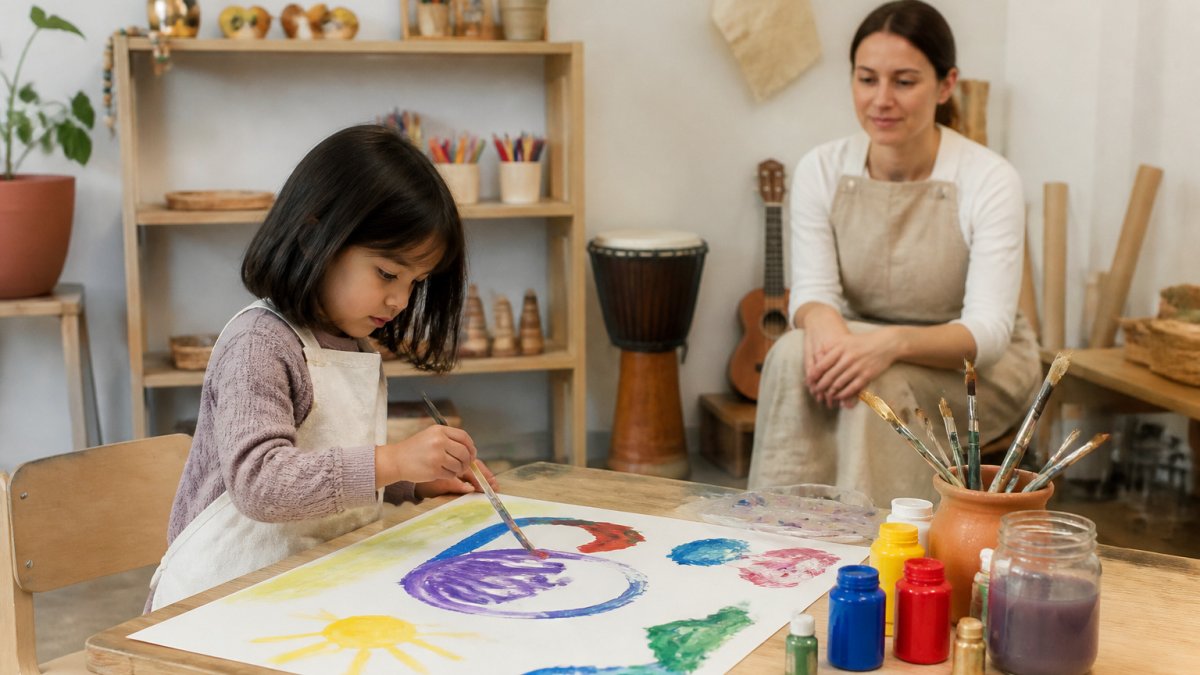
What to Expect from Art Therapy: Assessment, Sessions and Progress Reviews
Expectations should be honest. Creative arts therapy is one support among several, and changes are often gradual.
The article sets out the key session facts and how to think about progress, which a reader can scan at a glance.
| Item | Detail | Note |
|---|---|---|
| Session length | 45 minutes | One-on-one appointments |
| Materials | Provided | No previous art experience required |
| Focus | Exploration | Not producing good-looking artwork |
| Progress | Gradual | Changes are often gradual |
| Role of therapy | One support among several | Not a standalone fix |
Evidence, Limitations and Realistic Outcomes
The research on creative arts therapy for neurodivergent children is still developing, and parents deserve an honest account of what is and is not established. The 2025 systematic review noted earlier reported potential benefits for autistic children, but it did not provide clear sample sizes or quantified effects, so its findings should be read as encouraging rather than conclusive The Effectiveness of Art Therapy on Children and Adolescents, a 2025 systematic review. A separate thesis on expressive arts therapy with autistic children similarly suggests it may support mental health, but reports no measurable outcome Using Expressive Arts Therapy with Autistic Children to Help, a 2025 thesis. You can see how the approach is applied to grief in a practical guide to creative arts therapy for grief.
Choosing a Qualified Creative Arts Therapist, Consent and Access to Support
Pure Art Moments offers an introductory offer: book 6 sessions and your first session is free. A concession discount is available on request for pensioners or concession card holders. After purchase, email pam.pureartmoments@gmail.com or call 0433 680 513 to arrange session times; booking is confirmed within one business day. You can follow the steps in how to book a creative arts therapy session before you pay.
Frequently Asked Questions
What is creative arts therapy for neurodivergent children?
Creative arts therapy uses drawing, painting, music, movement, writing and role-play to help children explore and express feelings. For neurodivergent children, including autistic children and those with ADHD, it offers a route to emotional expression that does not depend on speech. A trained therapist adapts each session to the child's sensory needs, pace and interests. The aim is wellbeing and self-expression, not producing artwork, and sessions are led by the child's own choices.
How can art therapy support autistic children?
A systematic review published in 2025 found that art therapy showed promise in reducing autism symptoms and stress-related symptoms, and in supporting social communication, motor skills and language. The review did not report sample sizes or effect sizes, so the findings should be read as encouraging rather than conclusive. Art therapy for autistic children often focuses on emotional awareness, sensory comfort and a relationship built on choice and safety.
Is art therapy suitable for children who do not like drawing?
Yes. Creative arts therapy is not limited to drawing. Therapists may offer music, movement, clay, collage, writing or role-play, so a child can choose a medium that suits them. Refusing an activity is also a form of communication that a neurodiversity-affirming therapist will respect and explore, rather than treat as resistance to be overcome.
How do I find a neurodiversity-affirming art therapist?
Pure Art Moments offers creative arts therapy sessions, with an introductory offer of six sessions where the first is free, and a concession discount is available on request.
