
Table of Contents
- What Is Creative Arts Therapy for Grief Support?
- How Creativity Supports Grief Processing
- Creative Activities for Grief: Practical Exercises You Can Try
- Grief Art Therapy Exercises: Expressing What Words Cannot
- Art Therapy Prompts for Loss: Guided Creative Pathways
- Bereavement Counselling and Creative Arts Therapy: When to Seek Professional Support
- Choosing a Qualified Creative Arts Therapist
- Safety, Accessibility, and Self-Guided Practice
- Frequently Asked Questions
Last Updated: October 21, 2026
What Is Creative Arts Therapy for Grief Support?
Creative arts therapy grief support uses artistic expression to help people process loss and bereavement through creative arts therapy grief work. Rather than relying solely on words, it invites you to explore difficult emotions through painting, drawing, collage, sculpture, or other media.

At Pure Art Moments, we understand that grief doesn't follow a timeline. Sometimes feelings are too big or too raw for conversation alone.
The therapeutic relationship is central to creative arts therapy's effectiveness. A qualified therapist doesn't direct what you create or interpret what your work "means." Instead, they hold a calm, supportive space, listening, observing, and helping you reflect on what emerges, building emotional clarity and resilience over time.
Many people find that creative arts therapy grief support helps when grief feels isolating or words fall short. The physical act of making, choosing colours, moving your hands, can quiet the anxious mind and let deeper feelings surface.
How Creativity Supports Grief Processing
Creativity offers something talking therapy alone cannot: a direct channel to emotion that bypasses the thinking mind. When you're grieving, your rational mind gets stuck in loops, Why did this happen? What should I have done differently?
Grief processing through creative work happens in layers. Early on, creating might feel chaotic or raw, dark, aggressive, fragmented. That's not a sign something is wrong; it's evidence that something real is moving through you.
Making something physical is also powerful. Grief can feel invisible and internal; when you paint, draw, or build it, you externalise what was only inside.
Research and clinical practice show creative expression supports emotional processing by engaging different neural pathways than language alone.
Many people report feeling lighter, clearer, or more connected to themselves after creative arts therapy sessions, not because the grief has disappeared, but because they've given it form and witnessed it. That act of witnessing yourself, and being witnessed by a skilled facilitator, is part of what creates healing.
Creative Activities for Grief: Practical Exercises You Can Try
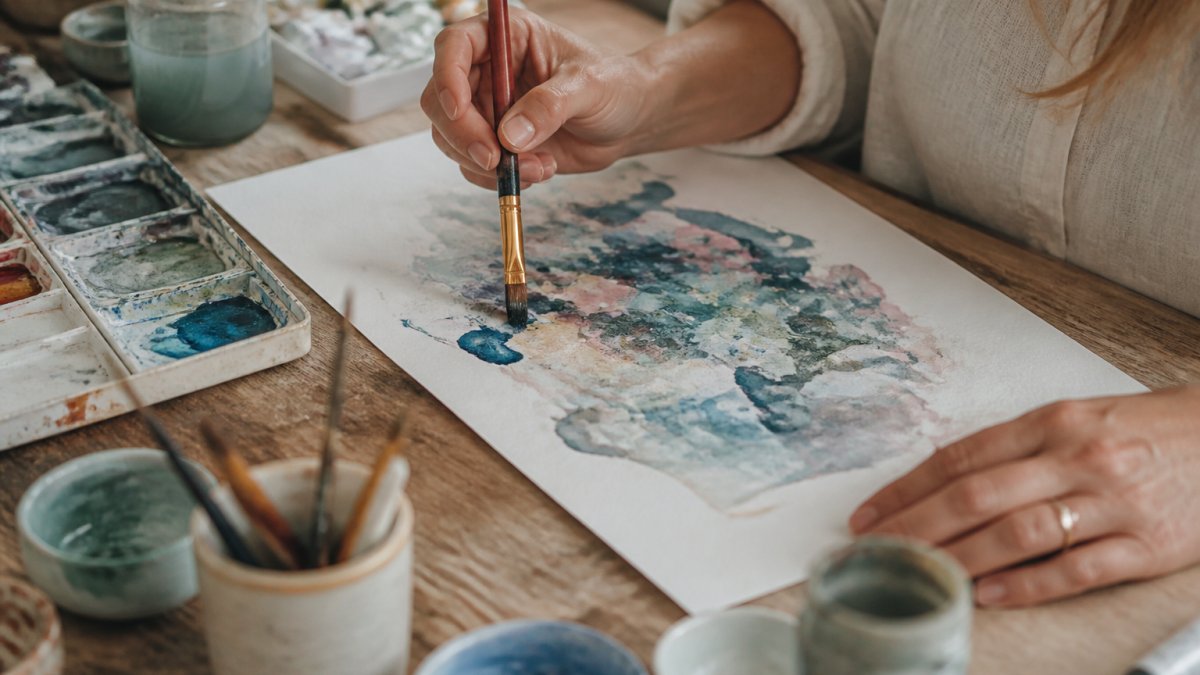
These practical creative activities for grief can be done alone or with a facilitator. There's no right way to do them. Trust what feels true for you in the moment.
Mandalas and Circular Art
Mandalas, circular patterns that radiate from a centre point, have been used across cultures as tools for reflection and healing (ncbi.nlm.nih.gov). Creating a mandala for grief gives your emotions a contained, circular form. The repetition of creating rings, patterns, or layers can be meditative and grounding.
To create a grief mandala, start with a circle (drawn or from a template) and work outward from the centre, adding colours, shapes, or marks that represent your feelings, bold colours for anger, softer tones for sadness, chaotic or ordered patterns depending on your state. No interpretation is needed; the mandala is simply a visual map of where you are today.
Returning to mandala-making over weeks or months shows how grief is shifting: the first might be all dark colours and sharp lines, while months later you notice softer edges or unexpected brightness. That visible change can be deeply reassuring.
Scrapbooks and Memory Collages
Scrapbooks and memory collages invite you to gather fragments, photographs, words, textures, and colours into something that holds meaning. This creative activity for grief honours specific memories while allowing space for complex feelings.
Gather materials: photos of the person you've lost, meaningful objects you can photograph, words that matter, colours that resonate. Arrange them on a page without overthinking the layout, glue them down or leave them loose, add drawings, handwriting, or painted sections. Selecting and arranging becomes a conversation with memory and loss.
Some people create one page; others return over months, adding layers as their grief evolves. There's no deadline, the scrapbook can be an ongoing project that holds your grief as it changes.
Thematic Collages and Colour Exploration
Thematic collages focus on a feeling or theme rather than specific memories, "anger," "love," "emptiness," or "what I wish I could say." Gather images, words, and textures from magazines or printed materials, then tear, cut, and arrange them to express that theme.
Colour exploration is equally powerful. Choose a colour that represents where you are emotionally, deep blue for sorrow, red for anger, grey for numbness, and spend time with it: paint it, find it in images, layer it with other shades. Notice whether its meaning shifts and what it tells you about your grief.
Grief Art Therapy Exercises: Expressing What Words Cannot
Sometimes grief art therapy exercises work best with a gentle structure. These invite you to express what words cannot reach.
The Colour of Feeling: Choose a colour matching your emotional state right now. Spend 10 minutes painting, drawing, or filling a page with it. Don't plan, let your hand move.
Loss and Absence: Draw or paint the shape of absence. What does the space left behind look like? You might create a silhouette, an empty chair, a blank page, or an abstract form. There's no "right" way to represent absence, trust what emerges.
Hands and Touch: If the person you've lost is no longer here to touch, create with your hands to honour that connection, handprints in paint or clay, or a sculpture made using only your hands.
Layering: Start with one colour or image. Cover it partially with another. Add a third layer. This exercise mirrors how grief layers, new feelings covering old ones, memories surfacing and receding. What does layering reveal about how your grief is structured?
Art Therapy Prompts for Loss: Guided Creative Pathways
Art therapy prompts for loss give you a starting point when you're not sure what to create, helping you move into creative expression even when grief feels overwhelming.
"If my grief were a landscape...", Paint, draw, or collage the landscape of your grief. Is it mountains, ocean, desert, forest? Is it stormy or calm?
Holistic Integrated Creative Arts Therapy →
"What I wish I could tell them...", Create visual art that expresses something you wish you could communicate to the person you've lost. You might use words, symbols, colours, or abstract forms.
"Before and after...", Create two pieces: one representing your life before the loss, one after. What has changed? What remains? This exercise helps you acknowledge what has shifted while recognising continuity.
"A day in their life...", Illustrate a specific memory or typical day with the person you've lost, including sensory details: colours, textures, objects, light.
"What I'm carrying...", Create art that represents what you're carrying forward, memories, values, lessons, love. This prompt shifts focus from what's been lost to what remains and travels with you.
Bereavement Counselling and Creative Arts Therapy: When to Seek Professional Support
Grief is not a disorder, and you don't need professional support to grieve. Many people move through loss with family, friends, and their own creative practice. However, there are times when professional support, including bereavement counselling combined with creative arts therapy, becomes valuable.
Consider seeking professional support if:
- Your grief feels stuck or is intensifying rather than gradually shifting over months
- You're having thoughts of harming yourself
- You're unable to manage daily tasks or self-care for an extended period
- Grief is triggering past trauma or unresolved losses
- You feel isolated and have no supportive community
- You're using substances or other harmful coping mechanisms to manage your feelings
- You want guided support to explore your grief in a structured way
Bereavement counselling combined with creative arts therapy offers real advantages. A trained facilitator helps you understand your grief patterns and identify what's helpful. The creative component means you're not only talking about your loss, you're expressing it, witnessing it, and moving it through your body and hands.
Professional support is also valuable for sudden or traumatic loss, multiple losses at once, or if you're a parent or carer navigating grief while supporting others.
Choosing a Qualified Creative Arts Therapist
Not all people who offer art-based support are qualified creative arts therapists. When choosing a facilitator, look for these markers.
Formal training in creative arts therapy: A qualified creative arts therapist has completed recognised training in the field. They understand grief processing, therapeutic relationships, and the ethics of working with vulnerable people.
Professional membership: Many countries have professional bodies for creative arts therapists. Look for practitioners registered with or affiliated to relevant professional organisations, which indicate ongoing development and ethical standards.
Experience with grief specifically: Some creative arts therapists have specialised training or extensive experience in bereavement work. Ask whether they've worked with grief and loss, and what their approach is.
A safe, calm space: Visit or ask about the physical environment where sessions happen. Does it feel calm and supportive? Are materials and boundaries clear? Does the facilitator explain confidentiality and what to expect?
Pure Art Moments offers Holistic Integrated Creative Arts Therapy appointments ($85.00 per session) designed for exactly this kind of guided, supportive exploration.
Safety, Accessibility, and Self-Guided Practice
Creative arts therapy is generally safe and accessible, but there are important considerations, especially if you're grieving deeply or managing mental health concerns.
Safety considerations:
- If you're experiencing suicidal thoughts or severe depression, creative arts therapy alone is not sufficient. Combine it with professional mental health support.
- If you have a history of trauma, let any facilitator know so they can create appropriate boundaries and pacing.
- Some people find that certain materials (sharp tools, heavy clay work) can feel triggering. Choose materials that feel safe for you, and pause if something doesn't feel right.
- If you're grieving a death by suicide, overdose, or violence, professional support alongside creative practice is important.
Accessibility:
Creative arts therapy can be adapted for most people. If you have physical limitations, mobility concerns, or sensory differences, discuss this with your facilitator. Materials can be adapted, positioning adjusted, and processes modified to suit your needs.
Self-guided creative practice is also valuable. The Spiral notebook Abstract Painting Print ($25.00) or Spiral notebook Garden Painting Journal ($34.00) can become a personal space for creative reflection and grief expression.

If you want structured guidance without one-on-one therapy, Pure Art Moments also offers Open Palette Journey | Untamed Canvas Sacred Flow Sessions ($52.00 per session). These group experiences combine gentle grounding meditation, curated music, and intuitive mixed-media exploration in a warm, supportive setting.

Grief changes you. It reshapes how you move through the world, what matters, and who you are. Book a Holistic Integrated Creative Arts Therapy session to begin your creative grief journey in a supported, nurturing environment.
Frequently Asked Questions
What is creative arts therapy for grief?
Creative arts therapy for grief is a form of expressive therapy that uses art-making, painting, drawing, collage, sculpture, or mixed media, to help people process loss and bereavement. Unlike talk therapy alone, creative arts therapy invites emotions and experiences to be expressed through visual and tactile means when words fall short. A qualified facilitator provides a supportive space where the creative process itself, not the finished artwork, becomes the focus for healing and self-discovery.
How can art therapy help with grief?
Art therapy supports grief by creating a safe outlet for emotional expression and meaning-making. The creative process allows bereaved people to externalise internal pain, explore conflicting emotions like anger and joy simultaneously, and gain personal insight at their own pace. Art-making can reduce anxiety, support psychological wellbeing, and help establish a therapeutic relationship with a facilitator who witnesses and validates the loss experience without judgment or time pressure.
Can you use art therapy for grief on your own, or do you need a therapist?
You can engage in self-guided creative activities for grief at home using art therapy prompts and simple materials. However, working with a qualified creative arts therapist offers significant advantages: professional guidance tailored to your specific needs, a trained facilitator who can recognise when additional support is needed, and a confidential, structured therapeutic relationship. A therapist can also help if your grief becomes overwhelming or if you have a history of trauma. Starting with self-guided practice and later seeking professional support is also a valid path.
What should I look for in a qualified creative arts therapist?
Look for a therapist registered with a recognised professional body in your country or equivalent professional association. Verify they hold formal training in creative arts therapy (not just art instruction), understand grief and bereavement, and have experience working with your specific situation, whether that's loss of a loved one, major life transition, or supporting a child. Ask about their approach, credentials, and whether they offer an initial consultation to ensure a good fit before committing to sessions.