
Last Updated: November 8, 2026
Quick Summary
To hang heavy canvas on plaster walls safely, first identify whether the wall is lath-and-plaster or plasterboard, then weigh the finished canvas and add a safety margin. Fix into a stud where possible, or use a heavy-duty anchor rated above that weight, and use two fixings for wider pieces.
- Tap the wall first: a hollow sound suggests plasterboard, a duller sound can point to plaster.
- Weigh the canvas including frame and hardware, then add a safety margin of at least 50 per cent.
- Use a stud fixing where possible, since it is the strongest fixing point.
- Drill slowly without hammer action to avoid cracking or blowout in the plaster.
- Use two fixings for pieces wider than about 60 cm to spread the load and keep it level.
Table of Contents
- Why Plaster Walls Need a Different Approach to Heavy Canvas
- Identifying Plaster, Lath and Plasterboard Before You Drill
- Weighing Your Canvas and Choosing the Right Hardware
- How to Find Studs Behind Plaster Walls
- Step-by-Step: How to Drill Into Plaster Without Cracking
- Choosing the Best Wall Anchors for Plaster Walls
- Hanging Your Canvas Securely and Renter-Friendly Removal
- Frequently Asked Questions
Why Plaster Walls Need a Different Approach to Heavy Canvas
Plaster walls look solid, but they hide a weak point. A heavy canvas that hangs fine on plasterboard can pull a fixing out of an old lath-and-plaster wall in minutes, so learning to hang heavy canvas safely protects both the artwork and your wall. Canvas prints can be substantial pieces, so getting the hanging right matters.
The fix starts with knowing what is behind the finish. Identifying what sits behind the wall finish and matching the hardware to both the wall and the artwork is good practice, since the right choice depends on the wall construction. There is no single hanging method that suits every plaster wall.
Here is how to approach it, step by step:
- Work out what kind of wall you have before you touch a drill
- Weigh the canvas and add a margin for safety
- Choose hardware rated for that weight and that wall type
- Find a stud or a solid fixing point where you can
- Drill slowly and check the fixing before you hang the piece
Identifying Plaster, Lath and Plasterboard Before You Drill
Before drilling, confirm what the wall is made of. Traditional lath-and-plaster walls have a hard, brittle coat over thin strips of timber or metal. Plasterboard is a flat, lighter panel with a softer core. The two respond very differently to a screw.
A simple way to check:
- Tap the wall. A hollow, drum-like sound often means plasterboard. A duller, solid sound can point to plaster.
- Look at an outlet or switch plate. The depth of the wall around the box can hint at the build.
- Check for cracks. Fine, map-like cracking is common on older lath-and-plaster walls.
If you are unsure, go slowly and test a small pilot hole in an inconspicuous spot first.
Weighing Your Canvas and Choosing the Right Hardware
Start by weighing the finished canvas, including the frame, stretcher bars and any wire or D-rings already fitted. A large stretched canvas can weigh far more than its size suggests, so when you hang heavy canvas, the hardware must be rated for the total load, not just the canvas. Add a safety margin of at least 50 per cent, then choose a fixing rated well above that figure. Read which printed art homewares actually last under heavy loads before you commit to a product. A 12 kg canvas, for example, should be matched to hardware rated for at least 18 kg.
For a quick reference:
| Artwork weight | Typical approach | Notes |
|---|---|---|
| Light (under 5 kg) | A single plaster-rated picture hook | Suits small prints and lightweight canvases |
| Medium (5 to 10 kg) | Two fixings or one rated anchor | Spread the load across two points |
| Heavy (10 to 20 kg) | A stud fixing or a heavy-duty anchor | Use two-point hanging where possible |
| Very heavy (over 20 kg) | Two stud fixings or a French cleat | Distribute the load and check the wall |
Canvas hanging wire, D-rings and stretcher-bar hardware
Canvas prints often arrive with mounting hardware already fitted, and the type matters as much as the weight:
- Hanging wire runs between two D-rings and lets the canvas sit close to the wall. It needs a fixing with enough height and a level check, and the wire should be rated for the canvas weight, thin craft wire is not suitable for heavy pieces.
- D-rings screwed into the stretcher bars give a secure point for a hook or wire. Check that the screws grip solid timber, not just the thin edge of the bar.
- Stretcher-bar hardware holds the canvas at the back. Confirm the screws bite into the timber frame rather than the canvas edge.
- French cleats suit very heavy or oversized canvases because they spread the load along a horizontal batten fixed to the wall. They are less forgiving of uneven walls, so check the wall is flat before fitting.
Some Pure Art Moments canvas prints come with mounting brackets included, so you can start from a ready-to-hang setup and add a rated fixing for your wall.
Load limits and safety margins by weight
Load ratings vary by product and wall type, so treat any figure as a ceiling, not a target. Always read the load rating on the packaging of any hook or anchor and match it to your canvas weight with a margin, since ratings vary by product and wall type.
A common pattern is to use two fixings for anything wider than about 60 cm, even if one fixing is rated for the weight. Two points spread the load, keep the canvas level and reduce the chance of a single fixing pulling out of brittle plaster. For anything over 20 kg, plan on a stud or a French cleat rather than relying on plaster alone.
Watch out: a hook rated for 20 kg on plasterboard may fail at half that load on old lath-and-plaster, because the plaster coat is brittle and the lath behind it may not grip the fixing evenly.
How to Find Studs Behind Plaster Walls
A stud is the strongest fixing point you can use. Finding one is the surest way to hang a heavy canvas.
Electronic stud finders help, but they have limits on plaster and lath. Metal lath, pipes and wiring can all trigger false readings. Use a stud finder as a first guide, then confirm with a small test hole. Measure from a corner or an outlet, since studs are usually spaced at regular intervals from there.
If you find no stud where you need one, use a rated anchor rather than forcing a screw into plaster alone.
Step-by-Step: How to Drill Into Plaster Without Cracking
Plaster is brittle, and the aim is to drill cleanly without vibration that can crack the surface or blow out the edge of the hole. The technique differs from drilling plasterboard because the hard plaster coat sits over lath, and the bit can catch or skate as it breaks through.
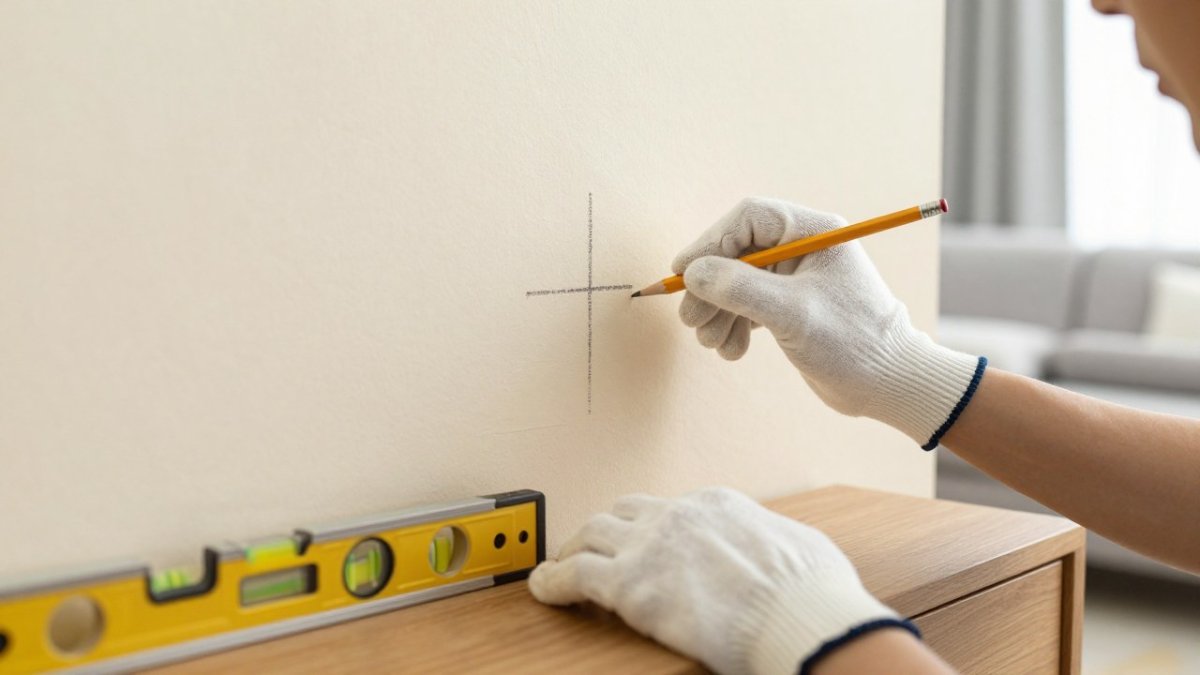
- Mark the position. Use a pencil and a level to mark the fixing points. Mark lightly so you can rub it out later.
- Put masking tape on the mark. Tape stops the bit from skating and catches some of the dust.
- Choose the right bit. Use a masonry drill bit sized to your anchor, not a wood bit. A bit that is too large will not grip the anchor; one that is too small will bind and crack the plaster.
- Start without hammer action. Drill on a low speed with light pressure until the bit has broken through the plaster coat. Hammer action on plaster can shatter the surface, so only use it if the anchor needs to pass into masonry behind.
- Ease through the lath. Traditional lath-and-plaster has thin timber or metal strips behind the plaster coat. Let the bit cut through slowly rather than forcing it, because a sudden catch can crack the plaster around the hole.
- Clear the dust. Brush out loose plaster dust from the hole before you insert the anchor. Dust stops anchors gripping and weakens the fixing.
- Test the fixing. Gently load it before hanging the canvas, and check for any movement or crumbling around the hole.
Watch out: pushing too hard is the most common cause of cracking and blowout around the hole. Let the drill's speed carry the bit through, and stop if you feel the bit catch.
If the plaster crumbles as you drill, the wall may be old or damp, and a different fixing point or a larger anchor plate may be needed. For very brittle plaster, a small pilot hole first, then the full-size bit, reduces the chance of a blowout.
Choosing the Best Wall Anchors for Plaster Walls
The right anchor depends on your wall and your artwork. Plasterboard anchors spread the load across the back of the board. Masonry anchors suit solid plaster. Screws driven into a stud are generally the most reliable option.
For heavy canvases, we suggest:
- A stud fixing where possible
- A heavy-duty plasterboard anchor rated above the artwork's weight for hollow sections
- Two fixings for wider pieces, to spread the load and keep the canvas level
Always read the load rating on the packaging and match it to your canvas weight with a margin.
Hanging Your Canvas Securely and Renter-Friendly Removal
Once the fixings are secure, hang the canvas and check it is level. Lift it onto the hooks or anchors, then nudge it into position. Step back and check the alignment from a distance.
If you rent, plan removal from the start. Use the smallest fixing that does the job, and keep the hole count low. When you take the piece down, remove the anchor gently so the plaster does not chip. Fill small holes with a suitable filler and touch up the paint to match the wall.
For more guidance on displaying art in rented homes, see our guide on How to Display Art in Rented Homes.
If you are still choosing a piece, our Canvas Prints vs Fine Art Paper for Coastal Decor guide compares weights and finishes, and Top 5 Art Print Sizes for Small Office Spaces can help you size a piece to the wall. For a durable option, our Heron Sunset Canvas Wall Art is a matte stretched canvas at 30″×60″ for $216.00 AUD, and the Abstract Kingfisher Canvas Print comes in a range of square sizes from $41.00 AUD.
Hanging a heavy canvas on plaster takes a little planning, but it is well within reach. Pure Art Moments offers original coastal-inspired canvas prints that are ready to hang, so you can focus on finding the right spot. Explore the collection and pick a piece that suits your wall.
Frequently Asked Questions
How do you hang heavy canvas art on plaster walls?
Start by identifying whether the wall is traditional lath and plaster or plasterboard, then weigh the canvas including its frame. For heavier pieces, locate a stud or lath strip and use a suitable anchor or screw rated above the artwork's weight. Use two hanging points where possible, drill a small pilot hole slowly with a masonry bit, and hang the canvas on hardware matched to both the wall and the frame.
Can you hang heavy art on plaster without drilling?
Adhesive strips and plaster-safe hooks can work for light canvases, but they are not reliable for heavy pieces. Adhesive can fail over time, especially in humid rooms or when plaster is painted or powdery. For anything substantial, a small pilot hole with a suitable anchor or screw into a stud or lath is the safer option, and removal can be managed with careful filling and touch-up paint.
How much weight can a plaster wall picture hook hold?
Plaster hook load ratings vary by product, so check the rating on the packaging. Treat any figure as an upper guide rather than a guarantee, since load depends on the hook, the anchor, the wall condition and where the weight sits. Build in a safety margin, and for anything near or above that limit, use a stud or lath-fixed screw instead.
Do you need to find a stud to hang a heavy canvas?
For canvases over a few kilograms, yes, or at least a solid lath or plaster-backed fixing point. Plaster hooks and plugs grip differently from a timber stud, and electronic stud finders can struggle through plaster and lath. Tap the wall to listen for solid sections, and confirm a fixing with a small test hole before committing to the final position.
