
Last Updated: October 23, 2026
Quick Summary
How to display art in rented homes safely involves using damage-free methods like adhesive strips, picture wire hung from existing hooks, or leaning artwork on shelves. Always check your tenancy agreement and get written permission from your landlord before hanging anything, then choose a method suited to your wall type and artwork weight.
- Most adhesive strips hold frames weighing 2-5 kg and peel away cleanly without leaving marks.
- Picture wire hung from existing hooks, picture rails, or door frames requires no new installation.
- Test adhesive strips on hidden wall areas first and wait 24 hours before hanging artwork.
- Brick, tile, and wallpapered walls don't bond reliably with adhesive; use wire or leaning methods instead.
- Remove strips at a 45-degree angle and photograph all walls before move-out to protect your bond.
Table of Contents
- Check Your Tenancy Agreement and Ask Permission
- How to Hang Pictures Without Nails or Drilling
- Renter-Friendly Ways to Hang Art on Different Wall Surfaces
- Leaning Artwork on Shelves and Ledges
- Gallery Wall Ideas for Renters
- Using Existing Hooks, Rails, and Other Rental-Safe Surfaces
- Safe Removal and Wall Repair at Move-Out
- Frequently Asked Questions
Check Your Tenancy Agreement and Ask Permission
Before learning how to display art in rented homes, check your tenancy agreement carefully. Most rental agreements specify what changes you can make to the property.
Contact your landlord or property manager before you start. A quick email or phone call takes five minutes.
Ask these specific questions:
- Can I use adhesive strips or hooks on the walls?
- Are nails or drilling allowed?
- Do I need written approval for any changes?
- What's the process for removing hanging hardware safely?
Document their response in writing. This protects you both. If your landlord approves adhesive strips but not nails, stick to that agreement.
How to Hang Pictures Without Nails or Drilling
Understanding how to display art in rented homes without nails or drilling is the safest approach. These methods leave no permanent damage and work on most wall types. The key is choosing the right product for your artwork's weight and wall surface.
Adhesive Picture-Hanging Strips and Hooks
Adhesive strips are the most popular damage-free hanging solution. They stick to your wall and hold your framed art securely. When you move out, they peel away cleanly without leaving marks.
Here's how to use adhesive picture-hanging strips:
- Clean your wall with a dry cloth to remove dust and debris
- Measure and mark where you want your artwork to hang
- Apply the adhesive strips to the back of your frame (not the wall first)
- Press the frame firmly against the wall for 30 seconds
- Wait 24 hours before adjusting or moving the artwork
Weight limits matter. Most adhesive strips hold frames weighing 2-5 kg. Check the product packaging for exact limits.
Adhesive hooks work similarly but offer a different look. They mount directly to the wall and accept picture wire or hanging hardware.
String and Wire Hanging Methods
String and wire methods use existing features on your walls or furniture. This approach works beautifully for leaning displays and requires no adhesive at all.
Picture wire attached to your frame's back can hang from existing hooks, picture rails, or even door frames.
This method suits:
- Frames with D-rings or wire loops already installed
- Walls with existing hooks from previous tenants
- Picture rails (common in older rental properties)
- Temporary gallery arrangements you plan to change frequently
String works for lightweight pieces under 2 kg. Use strong cotton or nylon string rated for hanging.
Renter-Friendly Ways to Hang Art on Different Wall Surfaces
Different wall types need different approaches. Painted drywall, plaster, brick, tile, and wallpapered walls all behave differently with adhesive products and hanging methods. The table below is a starting point, not a guarantee, always test on a hidden area first and check the product's stated weight limit.
| Wall surface | Adhesive strips | Adhesive hooks | Wire or string from existing fixing | Leaning | Notes |
|---|---|---|---|---|---|
| Painted drywall | Good for light frames | Good | Good | Good | Most common surface; clean and test first |
| Plaster (older homes) | Use with caution | Use with caution | Good | Good | Plaster can crumble; avoid heavy loads |
| Brick | Not recommended | Not recommended | Good from existing fixings | Good | Uneven surface defeats adhesive contact |
| Tile | Not recommended | Not recommended | Good from existing fixings | Good | Adhesive may not bond; grout lines reduce contact |
| Wallpaper | Avoid | Avoid | Good | Good | Adhesive can lift or tear wallpaper on removal |
Painted Drywall
Painted drywall is the most common wall type in rental homes.
Clean the wall first. Wipe it with a dry cloth to remove dust, which reduces adhesive grip.
Test your adhesive strips on a small, hidden area first.
When hanging heavier artwork (3-5 kg), use multiple strips. Space them evenly across the frame's back.
Adhesive hooks also perform well on painted drywall. They stick reliably and leave minimal marks when removed.
Plaster Walls
Older rentals often have plaster rather than drywall. Plaster is harder and denser, but it can crack or crumble under load. Adhesive strips may hold light frames, but the surface can fail before the adhesive does. Test a strip on a hidden area and remove it after 24 hours to check for flaking. For anything heavier than about 2 kg, prefer wire or string hung from an existing fixing, or lean the artwork instead.
Brick and Tile
Brick and tile are uneven, non-porous, or both. Adhesive strips and hooks rely on continuous contact, so they rarely hold reliably on these surfaces. Do not rely on them for anything you care about. Instead, use existing fixings, hooks, rails, or screws left by previous tenants, with picture wire, or lean framed pieces on a shelf or mantel. If you must use adhesive on tile, test on a grout line or hidden corner first and expect a lower weight limit than the packaging states.
Textured or Wallpapered Walls
Textured walls and wallpapered surfaces present challenges for adhesive products. The uneven surface reduces contact area, weakening the grip.
For textured walls, adhesive strips still work but with caution. Use heavy-duty strips rated for textured surfaces.
Wallpapered walls require care. Adhesive can damage the wallpaper when removed.
For wallpapered walls, picture wire hung from existing hooks is your safest option. String methods also work well.
Leaning Artwork on Shelves and Ledges
Leaning artwork is simple, flexible, and completely rental-friendly. No hanging hardware needed. You can rearrange pieces whenever you want.
Wave Textured Painting Canvas Print | Gallery-Quality Coastal Wall Art | 13 →
Shelves, ledges, mantels, and floating furniture all work as display surfaces. Lean your framed artwork against the wall at a slight angle.
Leaning works best for:
- Artwork you plan to change seasonally
- Multiple pieces arranged together
- Smaller frames (under 40 cm wide)
- Shelving that's already installed in your rental
Stack frames in groups of two or three for visual impact. Mix frame sizes and artwork styles. This creates a curated, gallery-like display.
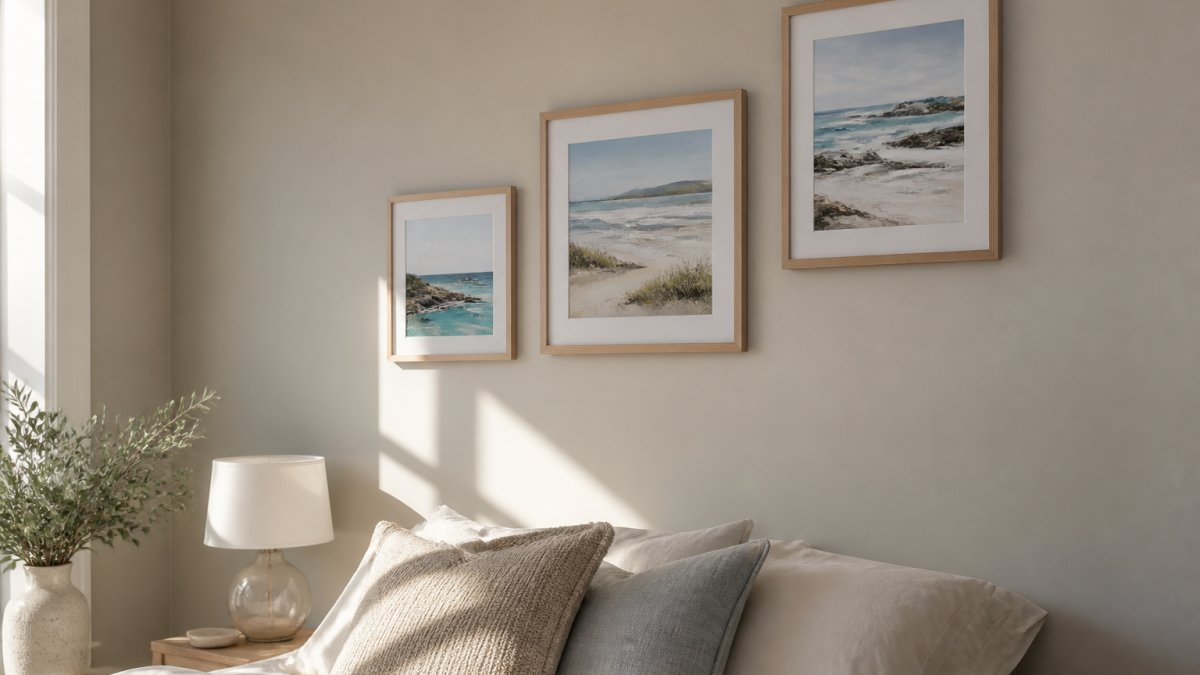
For coastal-inspired art, leaning pieces on floating shelves brings warmth to any room. Pure Art Moments' canvas prints work beautifully in this arrangement.

Gallery Wall Ideas for Renters
A gallery wall displays multiple pieces together as one statement.
Plan your layout first.
Measure distances carefully. Mark the wall lightly with pencil.
For a cohesive look, choose frames in the same colour or style.
Adhesive strips work well for gallery walls. Each frame needs its own strips.
Wire and string methods also suit gallery walls.
A gallery wall using Pure Art Moments' colourful abstract canvas prints creates bold visual impact.

Using Existing Hooks, Rails, and Other Rental-Safe Surfaces
Many rental properties already have hooks, picture rails, or other features you can use.
Picture rails are metal or wooden strips running along the wall.
Existing hooks from previous tenants are fair game.
Door frames offer unexpected hanging opportunities. Lean artwork against the top of a doorframe or hang it from existing trim.
Radiators, pipes, and other building features can hold artwork too.
Safe Removal and Wall Repair at Move-Out
Removing your artwork properly protects your bond refund. Take time to remove adhesive strips, hooks, and hanging hardware carefully, and document each step.
Check Your Lease Before You Remove Anything
Before you start pulling strips off the wall, re-read your tenancy agreement and any written approval you obtained. The agreement may specify how fixtures must be removed, what counts as fair wear and tear, and whether you must restore the wall to its original condition.
Distinguish removable fixtures from alterations. A hook you installed and can remove cleanly is usually a removable fixture; a hole you patched and repainted may count as an alteration if the finish doesn't match.
Step-by-Step Removal
- Remove artwork gently from the wall.
- Peel adhesive strips slowly at a 45-degree angle, following the manufacturer's removal instructions.
- Remove any remaining adhesive residue with a plastic scraper.
- Clean the wall with a dry cloth.
- Inspect for any damage and address it immediately.
Adhesive residue sometimes remains after strips come off. Use a plastic scraper or old credit card to gently remove it. Never use sharp tools that might damage the paint. If residue persists, rubbing alcohol on a cloth helps, but test it on a hidden area first.
Common Failure Points
- Pulling a strip straight out instead of down at an angle can tear paint.
- Removing strips too quickly can lift the top layer of drywall paper.
- Leaving residue to harden makes it harder to remove without damaging paint.
- Hanging overloaded strips causes sudden failure and larger wall damage.
Repairing Minor Damage
For nail holes or small marks, touch-up paint matching your wall colour works well. Ask your landlord for the original paint colour and finish. Many hardware stores can mix paint to match a sample.
Larger damage requires professional repair. Drywall holes bigger than 5 mm need patching compound and repainting. Budget for this if significant damage occurred. It's far cheaper than losing your bond.
Move-Out Checklist
- Re-read your tenancy agreement and any written approval.
- Remove all artwork and hardware.
- Peel strips at 45 degrees and remove residue.
- Fill and touch up any holes or marks.
- Photograph every wall before the final inspection.
- Email photos and approval records to your landlord or property manager.
Document your move-out condition. Take photos of all walls before you leave. This protects you if disputes arise about damage. Email these photos to your landlord with your final inspection.
Frequently Asked Questions
How can I hang art in a rental without damaging the walls?
Use damage-free methods: adhesive picture-hanging strips rated for your artwork's weight, removable hooks designed for renters, or lean artwork against walls and shelves. Always check your tenancy agreement first. Adhesive strips work best on clean, smooth painted walls. Test on a small area before committing. When removing, pull strips slowly at a 45-degree angle to minimise paint damage. For heavier pieces, use picture rails or existing hooks if available.
Do adhesive picture hooks work on all rental wall types?
Adhesive hooks work best on smooth, clean painted drywall. They're less reliable on textured, wallpapered, or glossy surfaces. Always test the hook's weight rating against your artwork first. Most adhesive strips hold 2-5 kg, though heavy-duty options support up to 10 kg. Clean the wall with a damp cloth and let it dry completely before applying. If your walls are textured or wallpapered, lean artwork or use shelves instead for better results.
What's the best way to arrange a gallery wall in a rental?
Plan your layout on paper first, then use painter's tape to mark positions on the wall. Use adhesive strips or removable hooks spaced evenly for visual balance. Mix frame sizes and artwork styles for interest, but keep spacing consistent. For renters, avoid drilling into walls; instead, layer smaller pieces or use ledges. Group artwork around a central focal point. Take photos before removing pieces so you can recreate the look if you move.
How do I remove adhesive hooks without damaging rental walls?
Remove adhesive strips slowly by pulling at a 45-degree angle rather than straight out. Use a hairdryer on low heat to warm the adhesive first, which helps it release cleanly. If residue remains, use a plastic scraper or your fingernail, never metal tools. For stubborn residue, a small amount of rubbing alcohol on a cloth can help. Test on a hidden area first. If damage occurs, document it with photos and discuss repair costs with your landlord before moving out.
