
Last Updated: October 26, 2026
Quick Summary
Printed art homewares durability depends heavily on materials, printing methods, and care rather than inherent fragility. Archival inks on canvas can last 50+ years when properly displayed, while cheaper dyes fade within 5-10 years, and longevity claims assume controlled conditions like framed display away from direct sunlight.
- Archival pigment inks resist fading for 50+ years when stored properly, while cheaper dyes fade noticeably within 5-10 years
- Canvas prints resist dust and humidity better than unframed paper, which can warp or buckle in damp environments
- UV-filtering glazing in frames reduces fading by up to 99% compared to unprotected prints
- Direct sunlight is the primary enemy of printed art; north-facing rooms with diffuse light preserve prints far longer than south-facing windows
- Lifespan claims assume framed display behind glazing with moderate light and stable humidity, not everyday use like dishwashers or sunny windowsills
Table of Contents
- The Reality of Printed Art Homewares Durability
- How to Get Good Quality Art Prints That Last
- Canvas Prints Versus Paper Prints: Which Holds Up Better
- Durability of Canvas Prints and Archival Inks
- How to Care for Printed Homewares Without Damaging Designs
- Protecting Your Printed Art Collection Long Term
- Frequently Asked Questions
The Reality of Printed Art Homewares Durability
Printed art homewares promise gallery-quality beauty in everyday objects, but do they hold up? It depends on materials, printing methods, and care.
Printed art homewares durability is a real concern for anyone investing in decor that's both functional and beautiful. A research team at Delft University of Technology examined how 3D-printed reproductions compare to originals, finding that printed reproductions offer new possibilities for art accessibility, though durability depends heavily on the materials used and environmental conditions.
High-quality printed art can last decades, but humidity, ultraviolet light, and everyday wear are genuine vulnerabilities. Understanding what affects longevity makes the difference between fading in a few years and staying vibrant for a lifetime.
The question isn't whether printed art can be durable, but whether you choose the right materials, printing method, and care routine.
How to Get Good Quality Art Prints That Last
Quality starts with materials and printing technology. Explore hand-painted alternatives as a more permanent option for your art collection. Archival inks, canvas weight, and paper type determine how well a print resists fading and deterioration.
Giclée printing sprays pigment ink onto canvas or paper, producing sharper detail and better colour accuracy than mass-produced methods.
Canvas weight and paper thickness matter too. Heavier materials resist creasing, warping, and damage, so look for canvas that feels substantial and paper that doesn't feel flimsy.
The printing process affects texture. A reproduction that preserves the original's brushwork and layering feels more like art and holds up better to handling.
Art conservationists recommend checking ink longevity ratings when evaluating prints. Manufacturers that test their inks against ultraviolet exposure and humidity changes publish these results.
For everyday homewares like mugs and cushions, material composition is critical. The Basic Pillow Bird Painting Print Cushion uses 100% machine-washable polyester, which resists staining and fading better than natural fibres and holds colour through repeated washing.

Canvas Prints Versus Paper Prints: Which Holds Up Better
Canvas and paper prints have different strengths. Canvas is more durable for wall art; paper is better for framing and display.
Paper prints, properly framed and matted, can last as long as canvas.
The real difference comes down to use case. If you want wall art that you'll touch, move, or clean occasionally, canvas wins.
Do Art Prints Fade in Sunlight and Other Light Damage
Direct sunlight is the primary enemy of printed art. Ultraviolet rays break down ink pigments and cause colours to shift or pale over time.
Prints fade fastest in harsh, direct sunlight. A print in a north-facing room with diffuse light lasts significantly longer than one opposite a south-facing window.
Archival inks resist fading better than standard inks, but no print is completely immune to light damage. The solution is positioning.
Humidity and temperature fluctuations accelerate fading too.
Durability of Canvas Prints and Archival Inks
Canvas prints with archival inks are the gold standard for longevity. This combination resists fading, moisture, and physical wear better than most alternatives.
Archival inks are formulated to resist chemical breakdown from light, humidity, and oxidation, and are tested to strict standards proving they won't shift colour or fade noticeably for 50, 75, or even 100+ years. Manufacturers advertise this prominently because it matters.
Floral Art Mug with Pink Interior – Pure Art Moments →
Canvas provides a stable substrate that won't yellow, crack, or become brittle like some papers, and its weave distributes stress evenly so the print resists temperature changes and physical flexing.
The combination of canvas and archival pigments is what separates a print that lasts decades from one that fades in a few years. If you're investing in printed art, this is worth the extra cost.
Printed homewares like mugs use a different approach. The Floral Art Mug with Pink Interior relies on ceramic durability and food-safe inks bonded to the surface, designed for repeated washing and hot liquids.

Archival inks and canvas combine to create prints with proven longevity under controlled conditions.
| Ink Type | Fade Resistance | Lifespan | Notes |
|---|---|---|---|
| Archival pigments | Resists chemical breakdown | 50+ years | Tested to strict standards |
| Quality pigments | Far better than dyes | 50+ years | When stored properly |
| Cheaper dyes | Fades noticeably | 5-10 years | Not recommended for art |
| Standard inks | Varies | Shorter | Less fade resistance than archival |
How to Care for Printed Homewares Without Damaging Designs
Care advice only works if you know what breaks a print. Printed homewares fail in four ways: ink fading from light, ink abrading from friction, ink lifting or cracking from heat and moisture, and the base material degrading underneath. Each material is vulnerable to a different combination, so one care routine won't fit all.
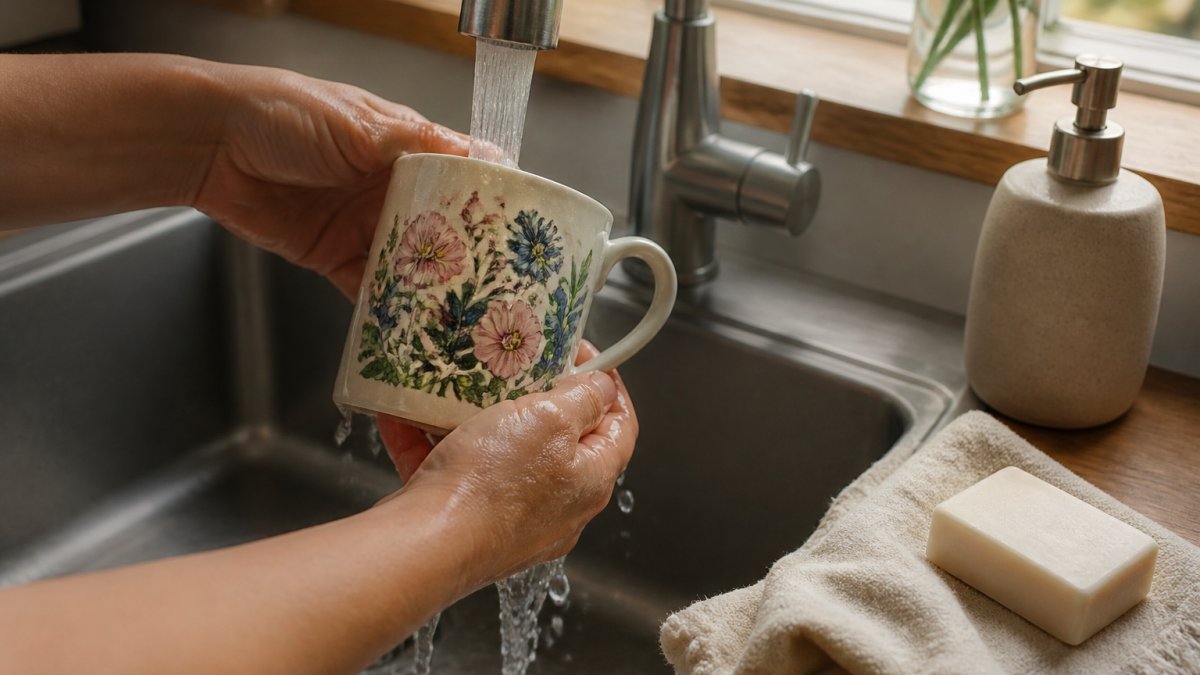
What actually wears printed homewares out
- Light exposure breaks down pigment molecules. This is slow on a mug but fast on a cushion left against a sunny window.
- Abrasion is the biggest killer of fabric prints. Every wash cycle and every rub against a sofa removes a microscopic layer of ink or fibres.
- Heat and moisture cause the base material to expand and contract. On ceramics, thermal shock can crack the glaze and the print with it. On fabric, hot water opens fibres and lets dye escape.
- Chemicals such as bleach and harsh detergents attack the ink binder, not just the colour.
Material-by-material care
Ceramic mugs and plates. Quality food-safe inks are fired or cured onto the surface, so the print sits in or on the glaze.
Cushions and fabric prints. Follow the care label, but a common pattern is cold machine wash on a gentle cycle, inside out, with mild detergent and no fabric softener, which leaves residue that dulls the print.
Tea towels and daily textiles. These take the most abrasion. Wash separately from items with zips or hooks that snag the weave, avoid overloading the machine, and expect the print to soften over time; that's normal wear, not a fault.
Glass and coated boards. The print under glass or coating is protected from contact, but the board is vulnerable to thermal shock and edge chips. Hand wash only, avoid the dishwasher, and don't use it as a trivet.
Wall art and framed prints. Dust with a soft, dry brush. Clean the glass, never the print. Keep framed work out of bathrooms and kitchens where steam spikes humidity.
A simple test before you buy
Ask the seller three questions: what ink system is used, what the care label says about washing and heat, and whether the print is rated for your intended use. A seller who can't answer these can't help you care for the product. For items used around food, children, or pets, confirm the inks and coatings are food-safe or child-safe as claimed, and whether the print is under a protective layer or exposed.
Protecting Your Printed Art Collection Long Term
Long-term protection is less about buying the most expensive piece and more about understanding what lifespan claims actually mean. The useful question is: what is the claim based on, and what conditions does it assume?
What lifespan claims really mean
When a maker says a print will last 50, 75, or 100+ years, that figure almost always comes from accelerated ageing tests: samples exposed to controlled light, heat, and humidity, with results extrapolated to normal display. It's a best-case estimate assuming framed display behind glazing, moderate light, and stable humidity, not a guarantee for a mug in a dishwasher or a cushion on a sunny sofa.
A common pattern is that wall-art claims are stated for framed display, while homeware claims are stated as a wash-cycle or use rating. Treat the two as different kinds of promise. If a seller quotes a single lifespan figure for every product they sell, ask what test it came from.
How to assess a warranty or durability claim
- Check what is covered. Many warranties cover manufacturing defects such as delamination or a print that fails in normal use, but exclude fading, which is treated as normal wear.
- Check the conditions. A warranty that is voided by dishwasher use, direct sunlight, or hand washing is telling you the real limits of the product.
- Check the remedy. Replacement, repair, or refund matters more than the headline number of years.
- Check the evidence. A maker who publishes test methods, ink systems, and care ratings is easier to trust than one who only publishes adjectives.
Under Australian Consumer Law, products must be of acceptable quality and fit for any purpose you made known to the seller.
Environment and handling that genuinely extend life
Temperature stability matters more than absolute temperature. Fluctuations cause expansion and contraction, leading to cracking, warping, and ink separation. A stable room beats a warm room that swings, so avoid placing art above heaters, beside stoves, or in steamy bathrooms.
Framing is one of the best investments for wall art. Learn specific framing techniques to protect your art prints long-term. A quality frame with UV-protective glazing, acid-free matting, and proper spacing keeps the print safe from dust, humidity spikes, and light damage.
Store prints flat if possible; rolled prints can develop permanent creases. If you must roll them, use acid-free tissue inside and a rigid tube, not a flimsy cardboard case. Handle prints by the edges or frame only, since skin oils can stain the surface and degrade inks.
For printed homewares, rotate usage. A mug used daily will show wear faster than one used weekly. Spreading usage across several pieces extends the life of each one, and it also gives you a fair test of which items are genuinely durable.
Frequently Asked Questions
How durable are printed art homewares really?
Durability depends on materials, inks, and care. Polyester-based homewares like cushions resist staining and hold colour well with proper washing. Ceramic mugs and tempered glass boards are scratch and cut-resistant when hand-washed. Archival inks and pigment-based printing extend lifespan significantly compared to dye-based alternatives. Most quality printed art homewares last years with everyday use if humidity and UV exposure are controlled.
Do printed art homewares fade over time?
Fading occurs primarily from prolonged UV exposure and humidity fluctuations. Pigment inks resist fading better than dye-based inks. Printed homewares kept away from direct sunlight fade much more slowly. Storing items in stable temperature and humidity conditions, ideally 40-60% relative humidity, slows colour degradation. Items used daily indoors (like mugs or cushions) typically maintain colour vibrancy for many years.
Can you use printed art homewares every day?
Yes, but care matters. Machine-washable polyester cushion covers withstand regular use; hand-wash the insert to preserve shape. Ceramic mugs tolerate daily dishwasher use, though hand-washing extends print longevity. Glass cutting boards are scratch-resistant and durable for routine kitchen work. Avoid abrasive sponges and high heat to prevent print wear. Quality printed homewares are designed for functional daily use, not just display.
What's the difference between printed art and original artwork in terms of durability?
Original hand-painted artwork is unique but vulnerable to the same environmental threats as prints: UV fading, humidity, and temperature swings. High-fidelity printed reproductions preserve colour and texture of originals while offering practical durability through modern inks and materials. Printed homewares integrate art into functional objects, spreading wear across the product (a mug handle, a cushion seam) rather than concentrating it on a single canvas or paper surface, often resulting in longer functional lifespan.
