
Table of Contents
- What Makes Coastal Art Prints Textured
- Textured Canvas Wall Art: Materials and Finishes
- Coastal Home Decor Styling Tips for Textured Art
- How to Hang Large Scale Coastal Art
- Framed vs. Canvas: Choosing the Right Format
- Maintaining and Preserving Textured Coastal Art
- Why Textured Coastal Art Transforms Your Space
- Frequently Asked Questions
Last Updated: October 2, 2026
What Makes Coastal Art Prints Textured
Coastal art prints with texture transform a flat image into a tactile experience. When you run your hand across a textured coastal print, you feel the artist's brushstrokes, the weave of canvas, or the raised finish of specialty materials, exactly what you'd experience standing in front of the original painting.
At Pure Art Moments, every coastal art print is meticulously reproduced to preserve the depth and texture of the original hand-painted studio work, creating a result that feels alive on your wall rather than flat or lifeless.
Texture in coastal art comes from three sources: canvas weave, paint or ink applied to textured surfaces, and specialty finishes that create dimensional effects.
Textured Canvas Wall Art: Materials and Finishes
Canvas Weave and Surface Options
Different canvas weaves create distinctly different effects: tight weaves produce subtle texture, while loose weaves create pronounced surface variation that catches light dramatically.
Natural Fibres in Coastal Prints
Natural fibres are increasingly incorporated into coastal print reproductions because they resonate with biophilic design, the human preference for natural materials and organic textures.
Natural fibres create visual warmth that synthetic materials cannot replicate, making the material part of the coastal story.
Coastal Home Decor Styling Tips for Textured Art
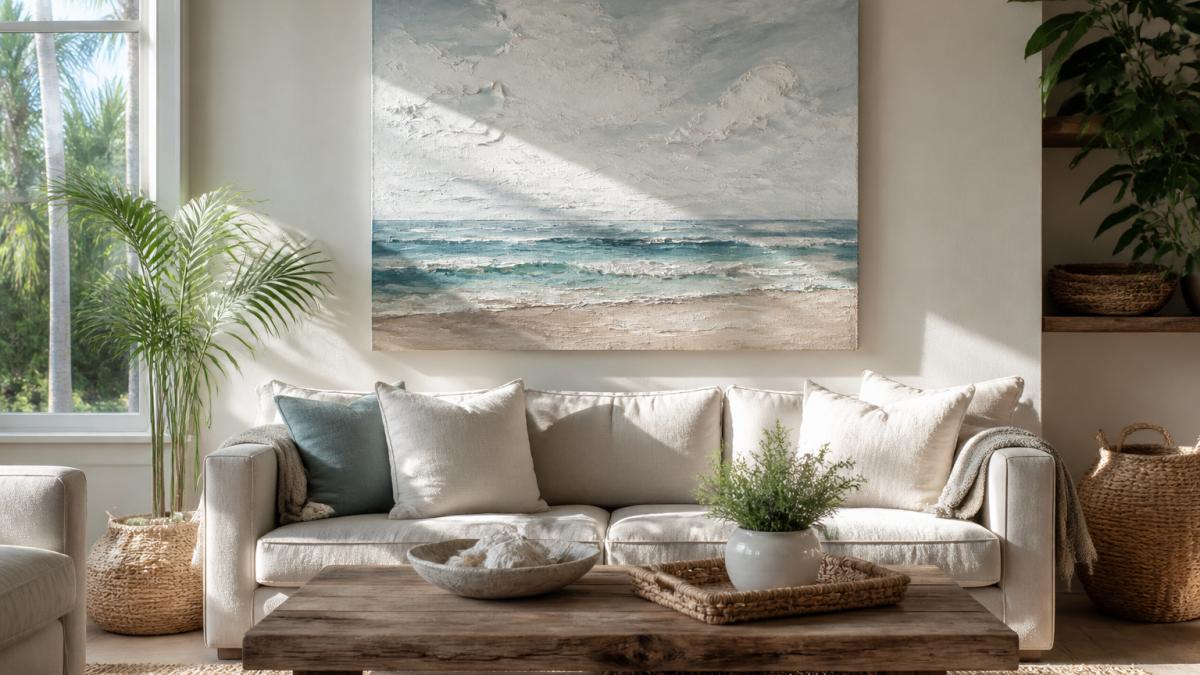
Textured coastal art demands thoughtful placement and complementary styling, as the texture becomes a design element and tactile focal point.
Textured coastal prints deserve dedicated attention: proper lighting, breathing room, and complementary furnishings that don't compete visually. They perform best as the primary visual anchor in a room.
Colour Palettes That Complement Textured Prints
Soft, neutral palettes allow texture to shine. Whites, creams, warm greys, and soft blues create a backdrop where texture becomes the hero.
Layer neutrals thoughtfully, warm white walls, cream upholstery, grey accents, and natural wood tones, to create depth without visual noise.
Muted accent colours in small quantities, soft sage green, dusty terracotta, or pale aqua, echo the coastal theme without overwhelming the artwork.
Lighting Your Textured Coastal Art
Directional light from a picture light, wall sconce, or natural window reveals the dimensional quality that makes textured prints special.
Avoid flat overhead lighting. Position light at 30-45 degrees to the print to emphasise texture without harsh glare.
Natural light changes throughout the day, offering different perspectives on your textured art and making it a living element that responds to natural rhythms.
How to Hang Large Scale Coastal Art
Sizing and Wall Placement Essentials
Size must match your wall space and room proportions. Your art should occupy 50-75% of the wall space above a furniture piece like a sofa or console.
Measure your wall before purchasing. For a 2-metre sofa, a print between 1.2 and 1.5 metres works well. For a feature wall, 60-75% coverage creates visual balance.
The centre of your artwork should sit at eye level, approximately 1.5 metres from the floor, allowing viewers to engage fully with the texture and detail.
Creating a Gallery Wall with Coastal Prints
Gallery walls multiply the impact of textured coastal art by combining several smaller pieces with complementary framing.
Space prints 5-10 centimetres apart for a modern look. Mix frame styles, natural wood, white, metal, to create visual rhythm.
Ensure all pieces share a common colour palette or subject matter so the gallery wall feels curated and creates a unified coastal aesthetic.
Framed vs. Canvas: Choosing the Right Format
Framed textured coastal art offers structure, protection, and a finished look. You can change the frame style to update your décor without replacing the artwork.
Canvas prints deliver a contemporary, gallery-like feel and work well for large-scale pieces and modern interiors. The canvas texture becomes visible and tactile, adding authenticity.
Serene, minimalist coastal scenes suit canvas best. Detailed seascapes may benefit from framing. Consider your room's existing style for consistency.
Maintaining and Preserving Textured Coastal Art
Protecting Prints in Humid Coastal Environments
Coastal homes face unique preservation challenges. Salt air, humidity, and temperature fluctuations degrade canvas, inks, and natural fibres. Understanding these risks helps you implement targeted protection.
Humidity is the primary threat, causing canvas and natural fibres to swell unevenly and flatten texture.
Salt air deposits microscopic crystals that degrade canvas fibres and cause inks to bleed.
Temperature fluctuations cause canvas to expand and contract, weakening the weave. Avoid placing art near air conditioning vents, heating ducts, or external walls.
Material-Specific Degradation and Prevention
Natural fibre textures are vulnerable to insect damage in warm, humid climates. Consult a conservator immediately if you notice holes or dust trails.
Cleaning and Long-Term Care
Textured prints require gentle, infrequent cleaning. Dust accumulates in surface variations and can trap moisture.
Use a soft-bristled brush or microfibre cloth, brushing gently in one direction following the weave pattern. Avoid circular motions and brush away from the frame.
For stubborn dust, use a hand-held vacuum with a screen attachment to prevent direct contact with the texture.
Never use water, cleaning solutions, or compressed air on textured coastal art. For deeper cleaning, contact a professional art conservator.
Storage and Relocation
Store prints flat, never rolled. Rolling cracks the surface texture. If too large, lean against a wall at no more than 20 degrees from vertical on a padded surface.
Wrap prints in acid-free paper or cloth. Standard newsprint and cardboard are acidic and will yellow the print.
Store in a climate-controlled space. Avoid attics, basements, and garages.
Secure prints in a rigid frame or box to prevent flexing. Use corner protectors to prevent impact damage.
Recognising Early Damage and When to Seek Help
Catch problems early to prevent irreversible damage. Common warning signs include:
- Visible warping or buckling of the canvas surface, particularly at edges or corners
- Flattening of texture in specific areas, suggesting moisture exposure or pressure damage
- Discolouration or dark spots, which may indicate mildew or mould growth
- Separation of canvas from frame, visible as gaps or lifting edges
- Ink bleeding or colour shift, particularly at edges or where the print meets the frame
If you notice any of these signs, stop using the print and consult a conservator. Early intervention can often reverse or halt damage. Waiting allows problems to compound, making restoration expensive or impossible.
Why Textured Coastal Art Transforms Your Space
The Biophilic Design Advantage
Textured coastal art engages a fundamental human preference for natural materials and organic forms. Biophilic design, the practice of incorporating nature into interior spaces, has documented effects on wellbeing, stress reduction, and cognitive function (Healthy Dwelling: Design of Biophilic Interior Environments Fostering Self-Care Practices...).
Coastal imagery specifically, water, horizons, natural light, activates the parasympathetic nervous system, the body's relaxation response.
Psychological Impact by Room and Purpose
The benefits of textured coastal art vary depending on where you place it and what you use the space for.
Bedrooms and sleep spaces: Coastal imagery promotes relaxation and sleep quality. The combination of soft blues and horizontal compositions (typical of seascapes) signals safety and calm to the brain.
Home offices and workspaces: Coastal art with texture improves focus and reduces mental fatigue.
Living rooms and social spaces: Textured coastal art serves as a conversation focal point and creates a sense of intentional curation.
Bathrooms and transitional spaces: Coastal imagery in bathrooms creates a spa-like atmosphere. The texture adds a sensory dimension that transforms a functional space into a retreat.
Emotional Connection and Personal Meaning
Textured coastal art creates emotional resonance that flat prints struggle to achieve. The tactile quality invites a deeper engagement with the image. You don't just look at a textured seascape; you experience it through multiple senses simultaneously.
Over time, a textured coastal print becomes a meaningful anchor in your home, associated with moments of calm, reflection, or joy.
For people with coastal connections, those who grew up near the ocean, who holiday by the sea, or who feel drawn to maritime themes, textured coastal art creates a tangible link to those meaningful experiences.
The Sensory Experience as Design Element
Textured coastal art performs a dual function: it decorates and it engages. Unlike flat wall décor, which serves primarily an aesthetic purpose, textured art invites interaction. This invitation to touch and examine closely transforms how people experience your space.
The interplay of light and shadow across texture creates visual interest that changes throughout the day. Morning light reveals subtle details; afternoon light emphasises dimensional qualities; evening light creates drama and depth.
This sensory richness is why textured coastal art transforms spaces more effectively than standard prints.
Frequently Asked Questions
What makes a coastal art print look textured?
Textured coastal art prints use specialized reproduction techniques that preserve the original brushstrokes, surface variations, and depth of hand-painted work. High-fidelity printing onto canvas or textured papers, combined with natural fibres like linen or wove finishes, creates tactile visual appeal. The texture catches light differently than flat prints, revealing layers of colour and dimension that replicate gallery-quality artwork.
How do textured canvas wall art and standard photographic prints differ?
Standard photographic prints are flat and smooth, relying on colour alone for visual impact. Textured canvas wall art incorporates physical surface variation through the canvas weave, ink layering, and finish treatments. This creates shadow and highlight play across the surface, making the artwork appear three-dimensional. Textured prints also age more gracefully, with natural fibres developing character over time rather than appearing dated.
Are textured coastal art prints durable in humid environments?
Quality textured prints using stretched canvas resist humidity well when properly sealed and displayed away from direct moisture. However, coastal environments with salt spray or high moisture require protective measures: controlled indoor humidity, and regular dusting. Avoid hanging textured prints directly in bathrooms or near open windows where condensation occurs.
Can I hang textured art prints without a frame?
Yes. Stretched canvas prints are designed to hang frameless, with gallery-wrapped edges that look finished on their own. Unframed canvas works particularly well in modern and coastal interiors. However, framing textured prints in glass or acrylic offers added protection from dust and humidity, especially in humid climates. Choose frames with mats that sit slightly away from the surface to avoid flattening the texture.